
Nigeria’s latest economic figures contain a message that deserves a closer look.
Headline inflation has fallen, but millions of Nigerians are still struggling with the cost of food and basic necessities.
WHAT THE NUMBERS SHOW
Headline inflation fell to 15.43 percent in July 2026 from 15.91 percent in June.
On paper, that appears to be positive news.
But there is another figure that ordinary Nigerians may find much more relevant.
Food inflation remained extremely high, while the monthly increase in food prices accelerated in July.
This means the overall inflation rate can be falling while the cost of feeding a family continues to put enormous pressure on household budgets.
THE ECONOMY NIGERIANS ACTUALLY EXPERIENCE
For millions of Nigerians, the economy is not experienced through inflation charts or financial-market statistics.
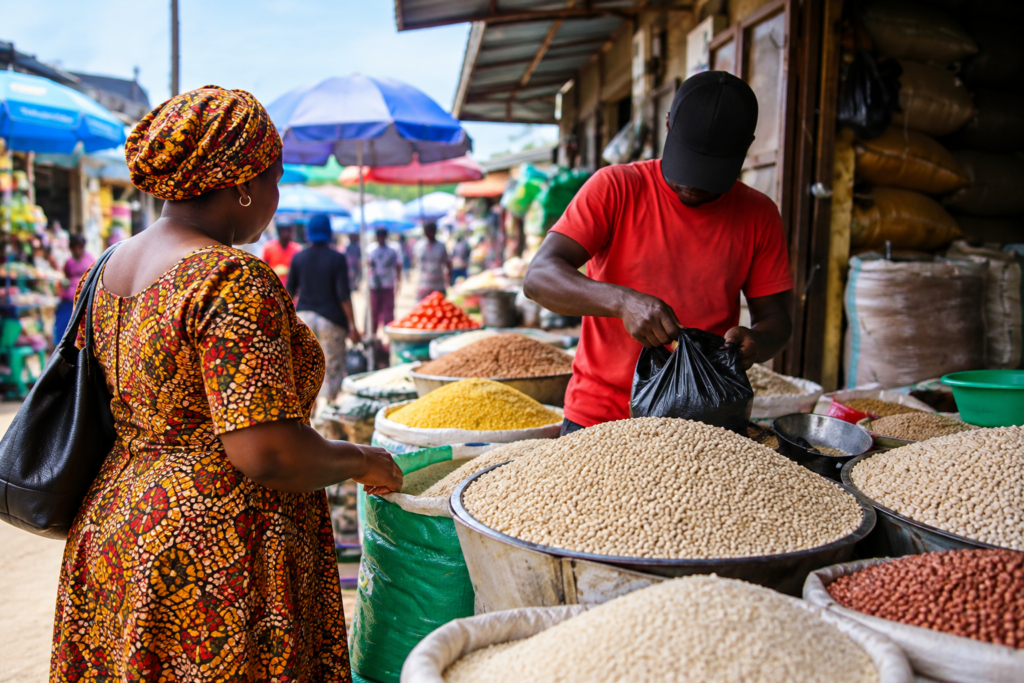
It is experienced in the market.
It is the price of rice.
The price of garri.
The price of tomatoes, onions, eggs and meat.
It is transportation.
It is school fees.
It is electricity.
It is rent.
It is the amount of money left in a family’s pocket after paying for basic necessities.
WHY THIS MATTERS
That is why the government and policymakers should be careful about presenting improving macroeconomic indicators as though they automatically mean that ordinary Nigerians are already experiencing economic recovery.
They are not the same thing.
There is evidence that Nigeria’s macroeconomic position has improved in some areas.
But economic stability only becomes meaningful to citizens when it begins to translate into stronger purchasing power, better jobs, affordable food, improved public services and greater security.
THE FOOD SECURITY QUESTION
The food situation is particularly concerning.
Millions of Nigerians continue to face food insecurity, with conflict, displacement, climate shocks and disruptions to food systems among the factors driving the problem.
This means Nigeria’s economic conversation cannot stop at the headline inflation rate.
Government must ask a more important question:
ARE NIGERIANS ACTUALLY ABLE TO LIVE BETTER?
THE GAP BETWEEN RECOVERY AND REALITY
If inflation is falling but food remains unaffordable, families are still struggling.
If economic growth is improving but household incomes remain weak, the benefits of that growth are not reaching enough people.
If government revenue is increasing but citizens cannot afford basic necessities, public policy must focus more aggressively on translating economic gains into household relief.
Nigeria does not need statistics that merely look better.
Nigeria needs an economy that ordinary people can actually feel.
The government therefore has an opportunity to prove that its economic reforms are not only improving financial indicators but are also improving the lives of Nigerians.
Until that happens, an important question will remain:
IF THE ECONOMY IS RECOVERING, WHY ARE SO MANY NIGERIANS STILL STRUGGLING TO AFFORD THE BASICS?
We don’t just report the news. We analyse what it means.
By Viewers Corner News