
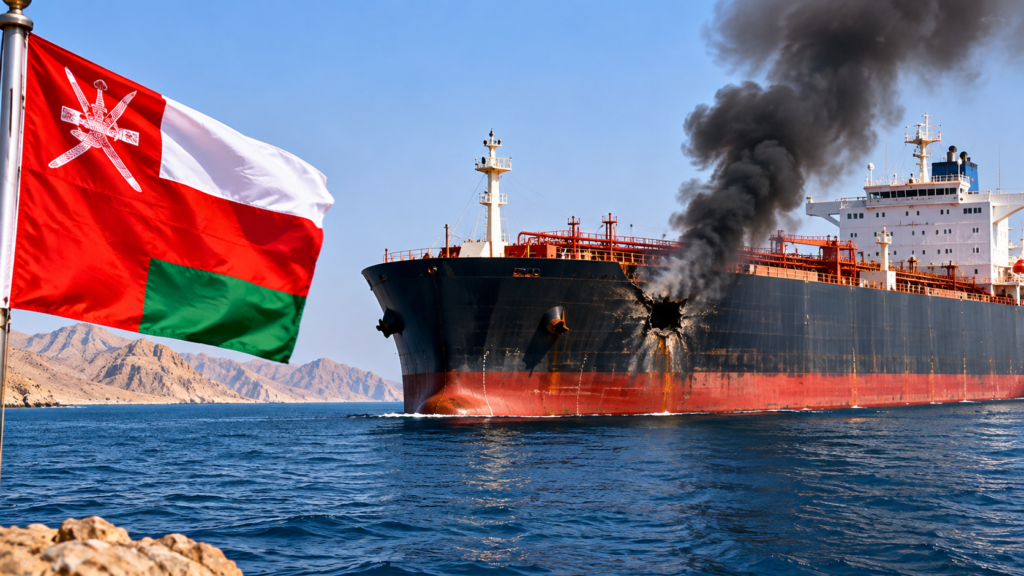
The reported incident is another warning that civilian shipping remains exposed to the growing security crisis around the Strait of Hormuz.
The United Kingdom Maritime Trade Operations centre received a report that the projectiles struck the vessel’s engine room approximately 14 nautical miles northeast of Limah.
The report came from the tanker company’s security officer.
No casualties or environmental impact were reported at the time. The vessel was not identified, and the source of the projectiles was not established.
On November 5, Iran’s Islamic Revolutionary Guard Corps made further claims that two tankers and a tugboat had caught fire after attempting to use unauthorised routes through the Strait of Hormuz.
Those claims must be treated carefully.
The IRGC has made the allegations, but the material reviewed for this report does not independently confirm the identities, circumstances or full extent of those incidents.
This distinction matters.
A confirmed maritime incident and an unverified military claim must not be presented as the same thing. In a conflict environment, inaccurate information can create further danger for crews, shipowners and governments trying to assess the risks.
However, the wider danger is already serious.
The International Maritime Organization reported on September 16 that it had verified 80 attacks on merchant vessels in and around the Strait of Hormuz, resulting in at least 22 seafarer deaths.
That is the latest published tally located for this briefing, not necessarily the current total.
The question now is what governments and international maritime institutions are doing to protect the people who operate these vessels.
Commercial ships are not military targets. Their crews are not combatants. Seafarers should not be forced to pay with their lives for geopolitical confrontations they did not create.
Oman and other Gulf states must explain the security measures protecting vessels in their surrounding waters.
Iran must provide verifiable information about its latest claims and explain the legal basis for any restrictions it is imposing on commercial shipping.
Other states operating military forces in the region must also demonstrate that their activities are not placing civilian crews at unnecessary risk.
The International Maritime Organization must provide an updated verified incident register, including vessel identities where disclosure is possible, attack locations, casualties, environmental damage and the status of investigations.
Shipping companies and flag states also have responsibilities.
What safety instructions have been issued to crews? Are vessels receiving reliable navigation warnings? What evacuation and emergency medical arrangements are available? Who is responsible for compensating families when seafarers are killed or injured?
The consequences extend beyond the Gulf.
Disruption to major shipping routes can affect freight costs, insurance, energy transport and international supply chains. Countries that depend on imported goods and energy can feel the impact even when their vessels are not directly involved.
For Nigeria, the Gulf is an important international economic and security concern.
But the immediate issue is human safety.
Governments must not allow the protection of commercial shipping to become another vague diplomatic promise.
Every attack must be investigated. Every death must be accounted for. Every claim must be independently verified.
The world needs more than warnings to proceed with caution.
It needs a credible system for protecting civilian shipping and holding those responsible for attacks accountable.
We don’t just report the news. We analyse what it means.
By Viewers Corner News.