
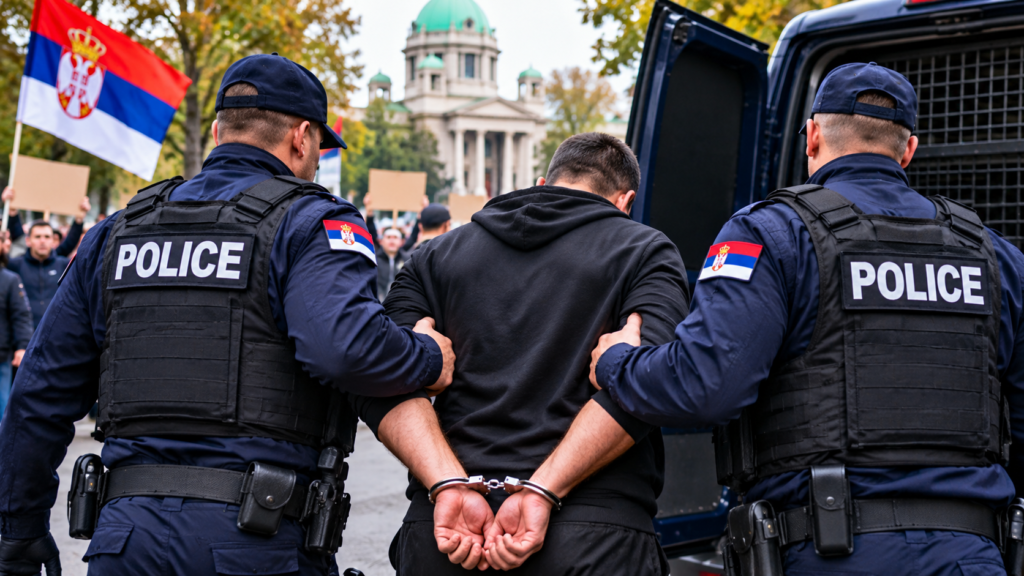
The arrests are significant, but the public should not confuse them with a completed accountability process.
Serbia’s Interior Ministry said nine serving officers and one former officer were detained on November 4.
The alleged abuse occurred during the detention of protesters at a garage within a government compound in Belgrade on August 14 and 15, 2025.
According to the ministry’s statement, the officers allegedly used force and threats to inflict severe suffering on detainees in an effort to obtain information and punish them unlawfully.
These are serious allegations.
They must be investigated independently, and anyone found responsible must face the consequences established by law.
But the investigation must not stop at the officers who carried out the alleged abuse.
Who authorised the detention operation? Who supervised the officers? Who controlled the facility? Were custody records maintained? Were medical complaints documented? Was CCTV footage preserved?
The ministry released only the initials of those detained.
The public deserves to know how the investigation will establish individual responsibility, supervisory failures and the wider chain of command.
The case is connected to a wider period of anti-corruption protests that swept Serbia after 16 people died when a concrete canopy at a renovated railway station in Novi Sad collapsed on November 1, 2024.
The collapse became a symbol of public anger over alleged corruption, poor oversight and accountability failures surrounding major public projects.
The protests later developed into a wider movement challenging the government and demanding political accountability.
During the demonstrations, protesters accused security personnel of excessive force, including the use of tear gas, crowd-control vehicles and stun grenades.
The new arrests are therefore an important test of whether Serbia’s institutions can investigate alleged abuses by the security agencies themselves.
Will prosecutors examine whether senior officers authorised or tolerated unlawful conduct? Will victims and witnesses be protected? Will the evidence be made available through a fair judicial process?
There is also a wider question about the accountability of public institutions.
When a major public infrastructure failure triggers protests, the government has a duty to investigate the original failure and respond lawfully to public demands.
Security agencies must not become instruments for intimidating citizens who question those in power.
The allegations against the detained officers have not yet been established in court. Arrests are not convictions, and every suspect is entitled to due process.
But the investigation must be thorough enough to establish what happened, who was responsible and whether institutional or political failures contributed to the alleged abuses.
Serbia cannot claim to have restored public trust simply because ten officers have been detained.
The public must see transparent proceedings, credible prosecutions where evidence supports them and accountability that extends beyond the people who physically carried out the alleged acts.
The real test is whether the investigation follows the evidence wherever it leads.
We don’t just report the news. We analyse what it means.
By Viewers Corner News