
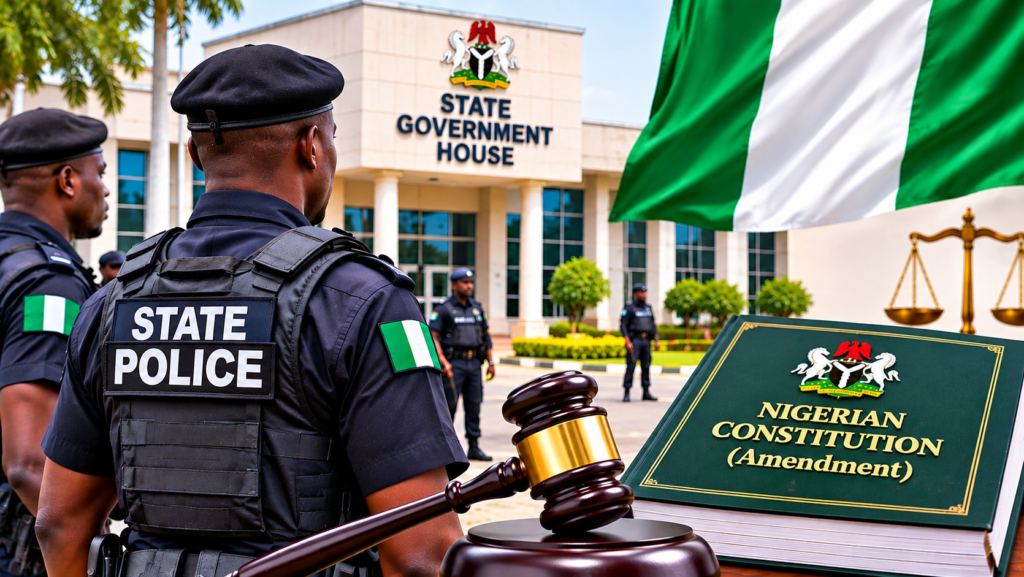
Thirty state Houses of Assembly have approved the proposed constitutional amendment to establish State Police Services in Nigeria, exceeding the constitutional requirement of 24 states for this stage of the amendment process.
Senate Leader Opeyemi Bamidele announced the development on November 4, saying the remaining six states had until November 15 to communicate their positions.
The proposal could significantly change Nigeria’s security structure. Supporters believe local policing will improve intelligence gathering, response times and community security.
But transferring policing powers to state governments raises another serious question: who will protect citizens when governors misuse those powers?
A governor must not be allowed to turn state police into an instrument for intimidating opposition politicians, silencing critics or suppressing peaceful protests.
The proposed amendment contains safeguards. Governors may issue lawful general policy directions but cannot direct arrests, detention or investigations against named individuals for partisan or personal purposes.
However, written restrictions alone are not enough. Nigerians need independent institutions capable of enforcing them.
Who will investigate a governor accused of interfering in a police operation? Who will protect officers who refuse unlawful orders? Who will investigate allegations of torture, extortion and unlawful detention? Can citizens complain to an independent body without fear of retaliation?
Funding is another major concern. State governments must disclose how much they allocate to their police services, how procurement contracts are awarded and how security expenditure is audited.
The National Assembly must establish enforceable national standards covering recruitment, training, command structures, use of force, detention, complaints, discipline and financial accountability.
State police services must not commence operations until they meet the required national standards and obtain the necessary certification under the proposed framework.
The National Assembly must also publish the final amendment text, confirm the status of the approval process and explain the timetable for implementing legislation.
Thirty state assemblies have approved the proposal. But approval is not proof that the system will protect Nigerians.
The questions now are:
Who will stop governors from using police against political opponents?
Who will independently investigate police abuse?
Who will audit state police budgets?
What protection will citizens have when the state government itself becomes the source of intimidation?
Nigeria needs effective policing. But citizens must not exchange one security problem for another.
The power to police a state must never become the power to intimidate its people.
We don’t just report the news. We analyse what it means.
By Viewers Corner News