
The Nigerian National Petroleum Company Limited (NNPC) has reported ₦4.608 trillion in revenue and ₦509 billion in profit after tax in September 2026. It also reported ₦11.14 trillion in statutory payments between January and September.
These are substantial financial figures. But Nigerians should not be expected to judge the performance of their national oil company by revenue and profit alone.
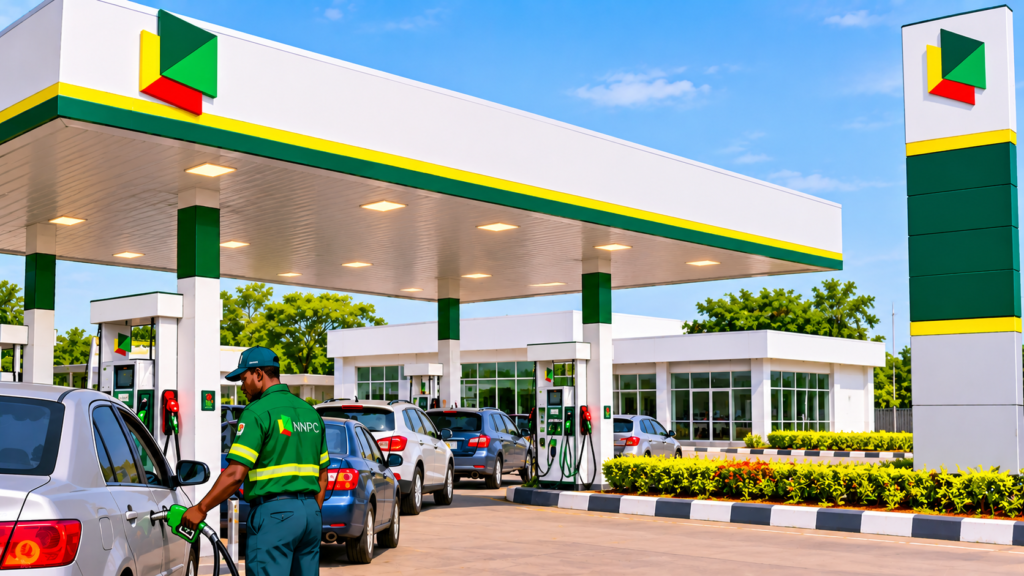
Buried in the same September report is an operational figure that demands an explanation: petrol availability at NNPC Retail Limited stations across the country was recorded at just 54 per cent.
The question is straightforward: how does NNPC explain its reported financial performance when petrol availability across its own retail network stands at 54 per cent?
This is not a claim that NNPC caused every petrol supply problem in the country. But the company must explain what this figure represents, why availability was recorded at that level and what it is doing to improve the situation.
The public deserves more than a collection of headline financial figures.
54 per cent petrol availability. What exactly is NNPC measuring?
NNPC’s published summary does not adequately explain how the 54 per cent petrol availability indicator was calculated.
Does it mean that only 54 per cent of NNPC Retail stations had petrol at a particular time? Is it an average across September? Does it represent the proportion of stations supplied during the reporting period, or is it based on another operational measurement?
How many retail stations were assessed? How frequently were they monitored? Were stations across all states included?
These details matter because a percentage without a clearly defined measurement can easily give the public an incomplete picture of retail performance.
NNPC must publish the number of stations assessed, the number with petrol available, the measurement period and the methodology used to arrive at the 54 per cent figure.
It should also disclose the geographical distribution of availability.
How many stations in the North-East, North-West, South-East, South-South, South-West and North-Central regions had petrol? Were some locations experiencing more frequent shortages than others?
If the company operates a nationwide retail network, Nigerians deserve to know how reliably that network is serving them.
And if availability was poor, what were the reasons? Were there supply constraints, distribution problems, logistical failures or other operational challenges?
A national oil company should be able to provide these answers with operational records.
₦11.14 trillion in statutory payments. Where did the money go?
NNPC reported ₦11.14 trillion in statutory payments between January and September 2026.
That is an enormous amount of public revenue. Yet the headline figure does not tell Nigerians enough about how the money was calculated, who received it or when the payments were made.
What exactly makes up the ₦11.14 trillion?
How much represented taxes? How much consisted of royalties, dividends or other statutory obligations? Which amounts were transferred to the Federation Account? Which government institutions received the payments, and on what dates?
The company should publish a detailed breakdown showing the nature of each payment, the receiving institution, the payment period and the corresponding government records.
The Federal Government, the Federation Account Allocation Committee and relevant revenue authorities should also make their records available for reconciliation.
NNPC cannot expect Nigerians to treat a single statutory payment figure as a complete account of public revenue.
The important question is not simply how much the company says it paid. It is whether those payments were received, properly recorded and reconciled with the relevant government accounts.
₦509 billion profit. What did Nigerians get in return?
NNPC reported ₦509 billion in profit after tax for September, alongside revenue of ₦4.608 trillion.
But profitability is only one measure of performance.
For a company occupying such a central position in Nigeria’s petroleum industry, operational reliability and domestic supply must also be examined.
What improvements did the reported financial performance produce in the company’s retail operations? How much was invested in distribution infrastructure, storage facilities, pipeline maintenance and operational efficiency?
What measurable improvements can Nigerians see in the availability of petrol at NNPC Retail stations?
A company can report a profit while still facing significant operational weaknesses. That is why financial performance must be examined alongside the services and infrastructure the company is expected to provide.
NNPC should publish a breakdown of its revenue, operating expenses, major investment commitments and the financial performance of its key business units.
Nigerians need to understand what generated the reported profit and whether the company’s operational capacity is improving alongside its financial results.
Crude oil production must not be hidden inside a combined figure
Another area requiring careful examination is NNPC’s reported hydrocarbon production.
The company reported total hydrocarbon production of 3.04 million barrels of oil equivalent per day.
However, this figure includes natural gas converted into oil-equivalent units. It must not be presented or interpreted as actual crude oil production.
The report separately records crude oil and condensate production at approximately 1.70 million barrels per day, alongside natural gas output of 7,789 million standard cubic feet per day.
These are different production measurements, and Nigerians deserve to see them reported separately and consistently.
How much crude oil was actually produced during the period? How much was sold? How much was exported? How much was allocated to domestic refineries? What quantities were lost through operational disruptions, theft or other causes, where established?
The government and NNPC must also explain how production figures reconcile with export records, sales receipts and revenue reported.
A combined hydrocarbon figure may be useful for industry analysis, but it must not obscure the actual volume of crude oil produced.
How can pipeline availability be 100 per cent while production faces repeated disruptions?
NNPC also reported 100 per cent upstream pipeline availability.
Yet the same report acknowledged production constraints arising from unplanned downtime, flowline leaks, equipment failures, community protests, storage limitations and export infrastructure disruptions.
These indicators may measure different things. Pipeline availability does not necessarily mean that every pipeline is operating at full capacity or that crude oil is flowing without interruption.
But NNPC must explain the distinction.
What exactly does the 100 per cent figure measure? Which pipelines and facilities were included? How was availability calculated? Does it measure technical readiness, operational uptime or something else?
How many hours of production were lost to unplanned downtime? What quantities of crude oil were affected by flowline leaks and equipment failures? What was the financial cost of these disruptions?
If pipeline infrastructure is reported as fully available while production continues to face operational constraints, Nigerians deserve an explanation of how both figures can be accurate.
The company should publish the underlying operational data rather than leave the public to interpret two apparently conflicting indicators.
Provisional figures are not the final account
There is another important qualification in NNPC’s report.
The company states that its production, sales and financial figures are provisional and subject to reconciliation with relevant stakeholders.
That qualification should not be buried beneath the headline figures.
What changes are expected after reconciliation? Which institutions are involved? When will the final figures be published? Will the reconciled information be made publicly available?
NNPC should provide a clear timetable for publishing the final figures and explain any significant differences between provisional and reconciled results.
The public must be able to distinguish between figures announced for monthly reporting and financial results that have undergone the relevant verification and reconciliation processes.
Transparency requires more than publishing numbers. It requires showing how those numbers were established.
What must NNPC put before Nigerians?
The company should publish a detailed operational and financial account addressing the questions raised by its September report.
At a minimum, Nigerians deserve:
– A clear methodology and station-by-station breakdown of the 54 per cent petrol availability figure.
– A geographical breakdown of retail petrol availability and supply interruptions.
– A detailed reconciliation of the ₦11.14 trillion in statutory payments.
– Separate crude oil, condensate and natural gas production figures.
– Actual crude oil sales, export volumes and domestic allocations.
– Details of production losses arising from leaks, downtime and infrastructure disruptions.
– An explanation of the 100 per cent upstream pipeline availability indicator.
– The final reconciled financial and operational figures, including material adjustments to the provisional report.
The Nigerian Upstream Petroleum Regulatory Commission, the Nigerian Midstream and Downstream Petroleum Regulatory Authority, the Federal Ministry of Finance and other relevant oversight institutions should also make their respective records available where they relate to these figures.
The National Assembly’s relevant petroleum committees must examine the company’s performance beyond the financial headline figures.
It is not enough to celebrate reported profits and statutory payments. Legislators must demand explanations for operational weaknesses, revenue reconciliation and the actual delivery of the company’s responsibilities.
A profitable NNPC must still answer to Nigerians
NNPC’s reported ₦509 billion profit after tax deserves examination, just as its ₦11.14 trillion statutory payments deserve reconciliation.
But the 54 per cent petrol availability figure cannot simply disappear beneath the financial headlines.
Nigerians need to know whether the company’s retail network is reliably supplying petrol, whether production constraints are costing the country revenue and whether statutory payments are properly accounted for.
The questions are clear:
Why was petrol availability recorded at 54 per cent, and how was that figure calculated?
Where is the detailed breakdown of the ₦11.14 trillion in statutory payments?
How much crude oil did Nigeria actually produce and sell?
What production losses resulted from pipeline leaks, equipment failures and unplanned downtime?
What does 100 per cent pipeline availability actually mean?
When will NNPC publish its final reconciled figures?
These are not unreasonable demands. They are basic questions about the management of a company whose operations have significant consequences for Nigeria’s economy and public finances.
NNPC must not be judged by how much money it reports earning alone. It must also account for how it operates, what it delivers and how every naira owed to the public is accounted for.
We don’t just report the news. We analyse what it means.
By Viewers Corner News