
President Bola Ahmed Tinubu’s government wants Nigerians to believe that single-digit inflation is within reach before the end of 2027.
Finance Minister Taiwo Oyedele has announced the target, linking lower inflation to the possibility of reduced interest rates, cheaper borrowing and stronger economic growth.
But Nigerians have heard enough economic targets. What they need now is a credible roadmap, measurable commitments and evidence that government policies will translate into lower living costs.
WHERE IS THE PLAN BEHIND THE PROMISE?
Nigeria’s headline inflation rate fell to 14.63 per cent in September 2026, from 15.39 per cent in August. That is a welcome reduction in the rate at which average prices are increasing.
But food inflation stood at 19.59 per cent, slightly above August’s 19.57 per cent.
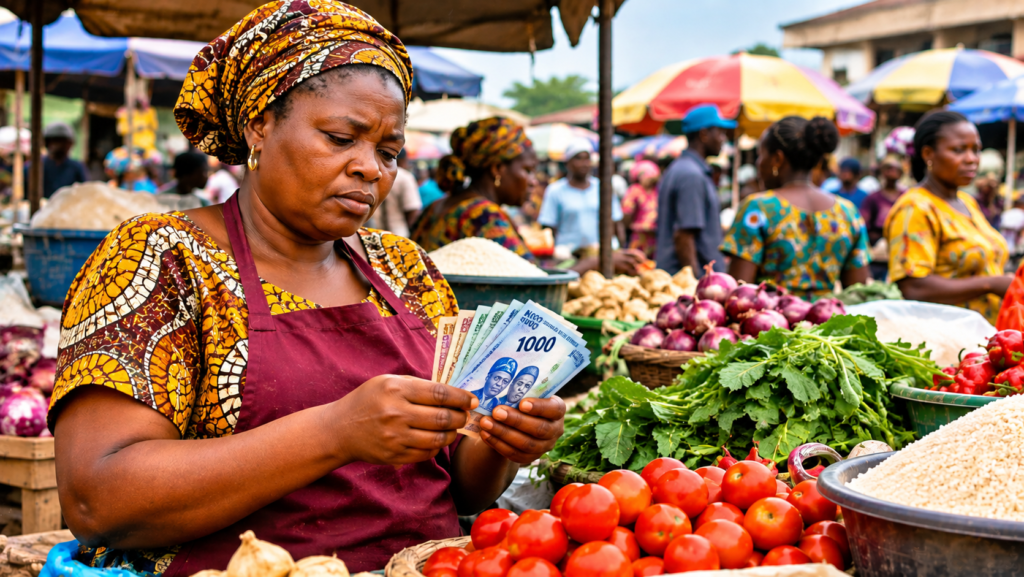
For millions of households, food is not an economic statistic. It is the daily struggle to afford rice, beans, garri, cooking oil, vegetables and other necessities.
A reduction in headline inflation does not mean that prices have returned to previous levels. It means the general price level is increasing more slowly. Families already hit by years of rising costs are still dealing with the consequences.
The government must therefore explain how its single-digit target will translate into actual improvements in what Nigerians can afford.
WHO IS RESPONSIBLE FOR BRINGING INFLATION DOWN?
The Finance Ministry cannot simply announce a target and leave Nigerians guessing about how it will be achieved.
What specific measures will the government implement to reduce food production costs, improve agricultural output, address insecurity in farming communities and reduce the cost of transporting goods?
What is the plan for tackling poor storage facilities, post-harvest losses, inadequate rural roads and disruptions to food supply chains?
How will the government address electricity and energy costs that feed into the prices of goods and services?
What measures will support exchange-rate stability without creating new distortions or placing unsustainable pressure on public finances?
These are the issues that determine whether production becomes cheaper, businesses can operate more efficiently and consumers eventually pay less.
The government must identify the policies, responsible ministries, implementation deadlines and measurable outcomes attached to each commitment.
WHERE ARE THE MILESTONES FOR 2027?
A target without intermediate milestones is difficult to scrutinise.
If the government expects single-digit inflation before the end of 2027, what rate does it expect to achieve by the end of 2026? What are the quarterly targets for 2027? Which indicators will determine whether the programme is on track?
The government should publish its inflation assumptions, policy framework and implementation timetable.
It should also explain what corrective measures will follow if inflation begins rising again or if the policies fail to produce the expected results.
Nigerians should not have to wait until December 2027 to discover that a target announced with confidence was never supported by a workable plan.
WILL LOWER INFLATION ACTUALLY MAKE LOANS CHEAPER?
Oyedele has linked the inflation target to the possibility of single-digit interest rates.
That ambition deserves scrutiny too.
Lower inflation can create room for monetary easing, but it does not automatically guarantee cheaper loans. Interest rates also depend on monetary policy, banking-sector risks, government borrowing, liquidity and other economic conditions.
What is the government’s strategy for reducing borrowing costs for small businesses, manufacturers, farmers and ordinary Nigerians?
How will it ensure that lower inflation translates into more affordable credit rather than simply improving headline economic indicators?
Businesses need financing they can afford. Farmers need credit to expand production. Manufacturers need predictable costs. Households need relief from expensive borrowing.
The government must explain how these benefits will reach the real economy.
WHO WILL MEASURE THE RESULTS, AND HOW WILL THE PUBLIC VERIFY THEM?
The National Bureau of Statistics publishes inflation figures, but the government must do more than celebrate favourable monthly reports.
It should publish regular progress reports covering headline inflation, food inflation, transport costs, energy prices, wages and household purchasing power.
It should also distinguish between lower inflation and falling prices. Nigerians must not be misled into believing that a slower increase in prices automatically means that the cost of living has returned to an affordable level.
The National Assembly should demand regular briefings from the relevant ministries and agencies on the measures being implemented and the results achieved.
Where targets are missed, officials should explain why, what has failed and what changes will follow.
NIGERIANS NEED RESULTS, NOT ANOTHER ECONOMIC PROMISE.
The recent decline in headline inflation provides a positive development. But one improved monthly figure does not establish that the country is on course to achieve single-digit inflation by 2027.
The government must publish the roadmap, identify the institutions responsible, disclose the policy milestones and make its progress independently verifiable.
It must also explain how ordinary households will benefit, particularly those whose incomes have failed to keep pace with the cost of food, transport, housing and essential services.
The central questions are straightforward:
What will bring food prices down? What will reduce production and transport costs? How will exchange-rate stability be sustained? When will borrowing become affordable? And what will the government do if its inflation target is missed?
President Tinubu’s government has announced the destination. Nigerians deserve to see the route, the timetable and the evidence that the journey is actually progressing.
Single-digit inflation must become more than a figure in a minister’s speech. It must translate into a measurable improvement in the lives of the people.
We don’t just report the news. We analyse what it means.
By Viewers Corner News