
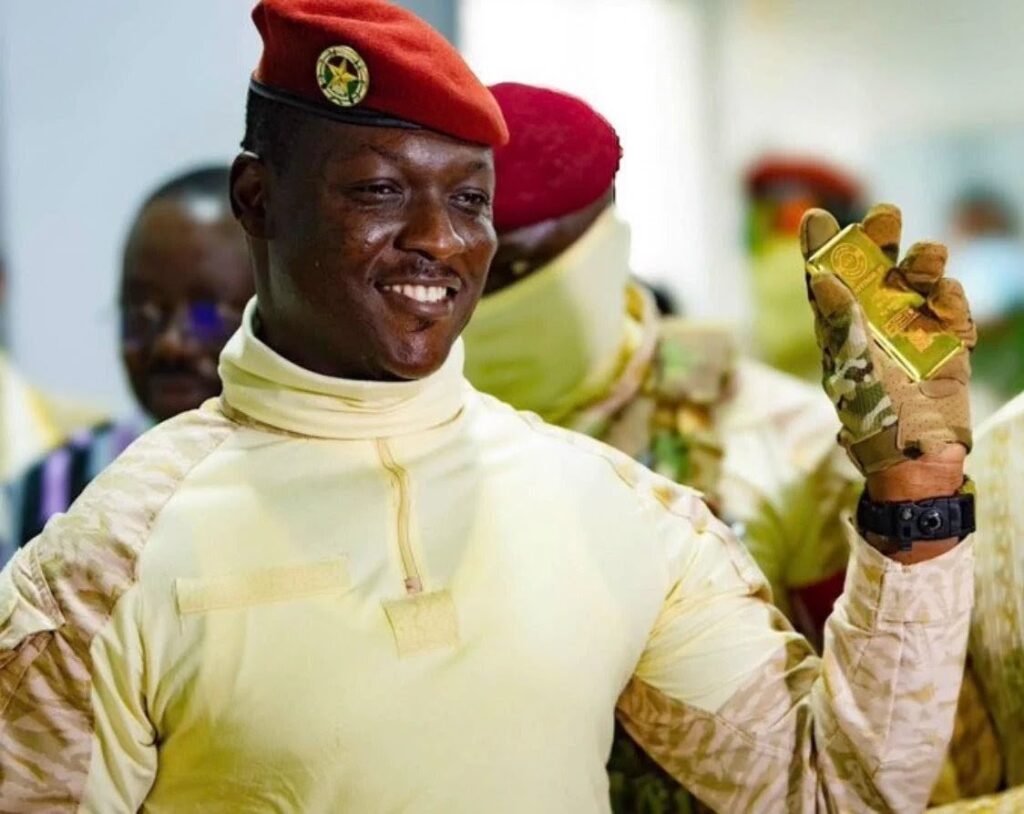
Burkina Faso has opened its first national gold refinery, giving Captain Ibrahim Traoré’s government a major new instrument in its campaign for greater control over the country’s natural resources.
The refinery is designed to process gold domestically rather than leaving the country to export more of its mineral wealth in less processed form.
The significance goes beyond the refinery itself.
For Traoré’s government, greater control over natural resources has become part of a broader sovereignty agenda that seeks to reduce dependence on former Western partners and retain more economic value within Burkina Faso.
The refinery therefore gives that political message a practical test.
If the country can process more gold domestically, improve oversight of production and capture more value from the mineral, the policy could strengthen government revenue and support domestic industrial development.
But processing gold locally does not automatically guarantee prosperity.
The government will still have to demonstrate transparency in the management of the refinery, effective regulation of mining, control of smuggling, responsible use of mining revenue and meaningful benefits for communities.
There is also the wider security problem.
Burkina Faso’s gold sector operates in a country that continues to face serious armed-group threats, particularly around mining regions.
That means economic sovereignty and security are closely connected.
The refinery may become a symbol of Burkina Faso’s break with its previous economic model.
But the real measure of success will be whether greater control of gold translates into jobs, stronger public finances, infrastructure and better living conditions for Burkinabè citizens.
The refinery has opened.
The harder question is what Burkina Faso does with the wealth that passes through it.
We don’t just report the news. We analyse what it means.
By Viewers Corner News