
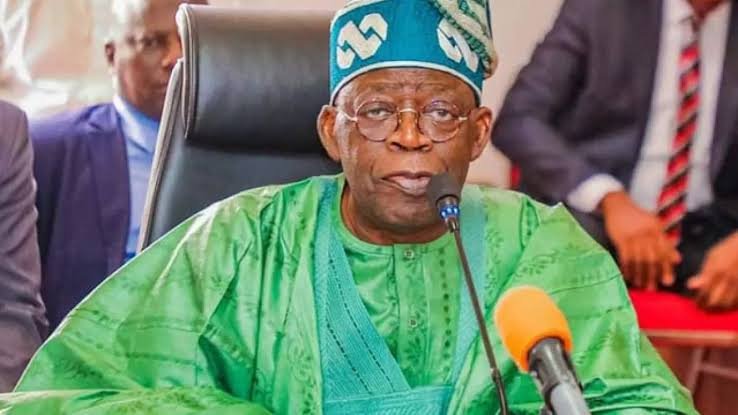
President Bola Ahmed Tinubu is seeking legislative approval for an external financing plan involving $20.52 billion and €1.045 billion for the 2026–2027 period.
That is a massive financial commitment being placed before a country already carrying substantial debt obligations.
The government says the proposed financing will support infrastructure, agriculture, healthcare, education, water supply, security and other development programmes. Finance Minister Taiwo Oyedele has reportedly defended the proposal as investment rather than simply debt accumulation.
But Nigerians should not be expected to accept that explanation without seeing the numbers.
Calling a loan investment does not cancel the repayment obligation. A road that is never completed, a railway that fails to deliver its projected benefits or a project inflated through questionable procurement can leave taxpayers with the debt long after the promised development has failed to materialise.
THE NATIONAL ASSEMBLY MUST NOT APPROVE A BILLION-DOLLAR BLANK CHEQUE.
The government says the financing plan covers 46 projects across 11 sectors, with transport infrastructure reportedly accounting for approximately $10.6 billion.
Among the projects identified are sections of the Lagos–Calabar Coastal Highway, the Sokoto–Badagry Highway and the Kano–Kaduna rail project.
These are major infrastructure proposals. But naming projects and attaching impressive figures to them is not evidence that the financing is justified, the costs are reasonable or the projects will be delivered.
Where is the complete project ledger?
For every project, lawmakers must demand its approved cost, financing source, implementation timeline, feasibility study, contractor, procurement method and expected economic returns.
If these projects are genuinely ready for financing, the government should have the documentation to support them.
WHO ARE THE CONTRACTORS, AND HOW WERE THEY SELECTED?
The National Assembly must establish which companies will execute each project.
Were contractors selected through competitive procurement? How many companies participated? What were the evaluation criteria? Were independent cost assessments conducted before contract awards?
Where contracts have already been awarded, lawmakers should demand the contract sums, scope of work, commencement dates, payment schedules and evidence of work completed.
The public must be able to trace the money from the financing agreement to the contractor, from the contractor to the project site, and from the project site to measurable delivery.
If any project involves a contractor or procurement arrangement that has not been transparently disclosed, that information must be established before approval.
WHAT WILL THESE LOANS ACTUALLY COST NIGERIANS?
The government must disclose the financial terms of every proposed facility.
What are the interest rates? What are the repayment periods? Are there grace periods? What currencies will the loans be denominated in? Are there commitment fees, management charges, insurance costs or other conditions?
Who bears the foreign-exchange risk if the naira depreciates further?
A loan that appears affordable at the point of approval can become considerably more expensive when exchange-rate movements and repayment obligations are taken into account.
Lawmakers must examine the total repayment cost, not simply the headline amount being requested.
They must also establish how these proposed facilities will affect Nigeria’s future debt-service obligations and the resources available for salaries, healthcare, education and other essential public services.
WHERE IS THE EVIDENCE THAT PREVIOUS BORROWING DELIVERED VALUE?
Before approving another major financing programme, the National Assembly should demand an account of earlier borrowing approvals.
Which projects were financed? How much was actually drawn down? How much has been spent? Which projects have been completed? Which remain unfinished? What benefits have Nigerians received?
Where projects have suffered delays or cost increases, who was responsible, what corrective action was taken and what additional public money was required?
The government must also explain whether any of the 46 proposed projects overlap with previously approved or ongoing financing arrangements.
Nigerians should not be exposed to the possibility of paying twice for overlapping projects, duplicated financing or commitments that have not been properly reconciled.
THE $10.6 BILLION TRANSPORT QUESTION
With transport infrastructure reportedly accounting for approximately $10.6 billion, this allocation deserves particularly close scrutiny.
What specific sections of the Lagos–Calabar Coastal Highway and Sokoto–Badagry Highway are covered? What is the cost per section? What is the construction timeline? Who will supervise the work? What independent engineering assessments support the estimates?
For the Kano–Kaduna rail project, what exactly is being financed? What are the outstanding project obligations, the expected completion date and the projected passenger and freight benefits?
Lawmakers must not approve large transport allocations based on project names and broad development promises. They need detailed engineering, financial and procurement records.
WHAT SAFEGUARDS WILL PREVENT COST OVERRUNS AND ABANDONED PROJECTS?
Every financing agreement should be tied to clear delivery milestones.
Payments should be supported by independently verified work. Cost variations should be documented and justified. Contractors should face enforceable penalties for unjustified delays and failure to meet contractual obligations.
The government must also publish periodic reports showing how much has been borrowed, how much has been disbursed, what has been spent and what has physically been delivered.
The National Assembly should insist on independent audits and public access to project implementation records.
It is not enough to approve the financing and wait for the next budget cycle to discover whether the projects are progressing.
LAWMAKERS MUST ASK THE QUESTIONS BEFORE THEY APPROVE.
The proposal is a request for legislative approval to pursue external financing. It does not mean the entire amount has already been borrowed or disbursed.
That distinction matters. But it does not reduce the responsibility of lawmakers. It gives them an opportunity to establish the conditions, safeguards and transparency requirements before the country assumes further obligations.
The National Assembly must not become a rubber stamp for executive borrowing requests.
Its responsibility is to scrutinise the figures, challenge the assumptions, examine the contracts, establish the repayment implications and demand evidence that the proposed projects can deliver value for money.
If the government cannot provide a complete project ledger, transparent financing terms and credible implementation plans, lawmakers should demand those documents before proceeding with approval.
Nigeria needs roads, railways, hospitals, schools, water infrastructure and improved security. But development cannot be measured by the volume of money borrowed or the number of projects announced.
It must be measured by what is completed, what works, what Nigerians can use and what economic benefits are actually delivered.
The question is no longer simply how much the government wants to borrow.
It is who will account for every dollar and euro, who will guarantee delivery, and who will answer when the promised projects fail to materialise?
The Presidency must produce the evidence. The National Assembly must demand it. And Nigerians must be able to follow every major commitment from approval to final delivery.
A country should not inherit decades of repayment obligations for projects whose costs, contractors and results its citizens cannot properly examine.
We don’t just report the news. We analyse what it means.
By Viewers Corner News