
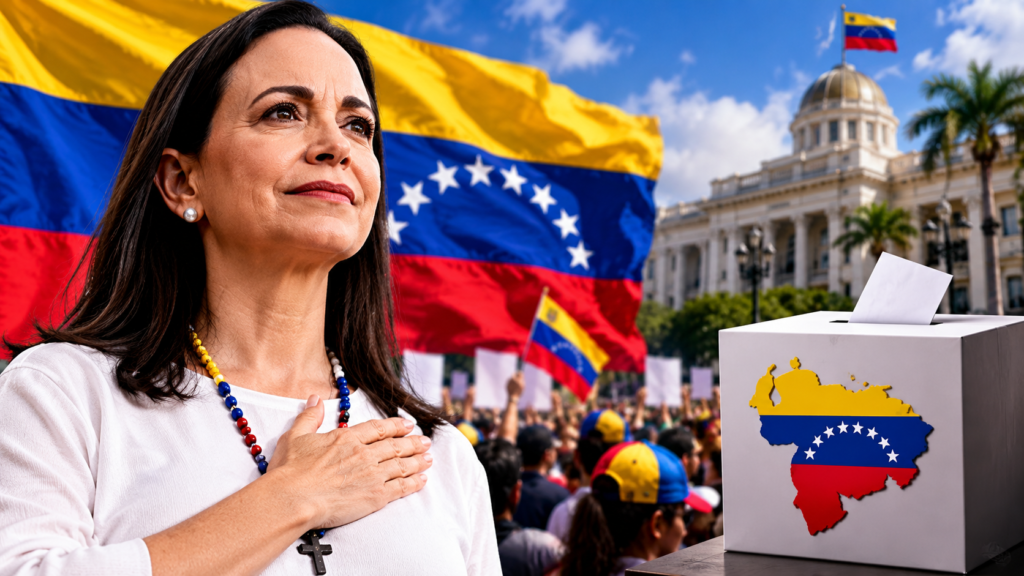
Venezuelan opposition leader and Nobel Peace Prize laureate María Corina Machado returned to Venezuela on Sunday, 25 October, after months abroad. Her return places renewed attention on a political transition whose democratic destination remains uncertain.
Machado has called for a credible presidential election. But her return alone does not guarantee that an election will take place, that opposition candidates will be allowed to compete freely or that voters will have confidence in the outcome.
Venezuela’s political landscape has changed dramatically since United States forces removed President Nicolás Maduro from power in January 2026. Interim President Delcy Rodríguez remains in office, while Washington has pursued engagement with her administration.
The competing interests create difficult questions about who will determine Venezuela’s political future. The return of a prominent opposition figure may increase pressure for elections, but the country still needs a clear and credible timetable.
The authorities should state when elections will be held, what safeguards will protect political participation and how the independence of electoral institutions will be ensured. Opposition parties should be able to organise, campaign and present candidates without intimidation.
Foreign governments should also explain how their diplomatic and economic dealings support a legitimate transition and respect the political rights of Venezuelans.
The wider implications extend beyond Venezuela. The country’s political stability affects regional migration, energy markets and relations between the United States and Latin America.
Machado’s homecoming is significant, but it is not the final measure of democratic progress. The real test is whether Venezuelans can choose their leaders in a credible election and whether the result will be respected.
Until an election timetable and meaningful safeguards are established, the transition remains unresolved.
We don’t just report the news. We analyse what it means.
By Viewers Corner News