
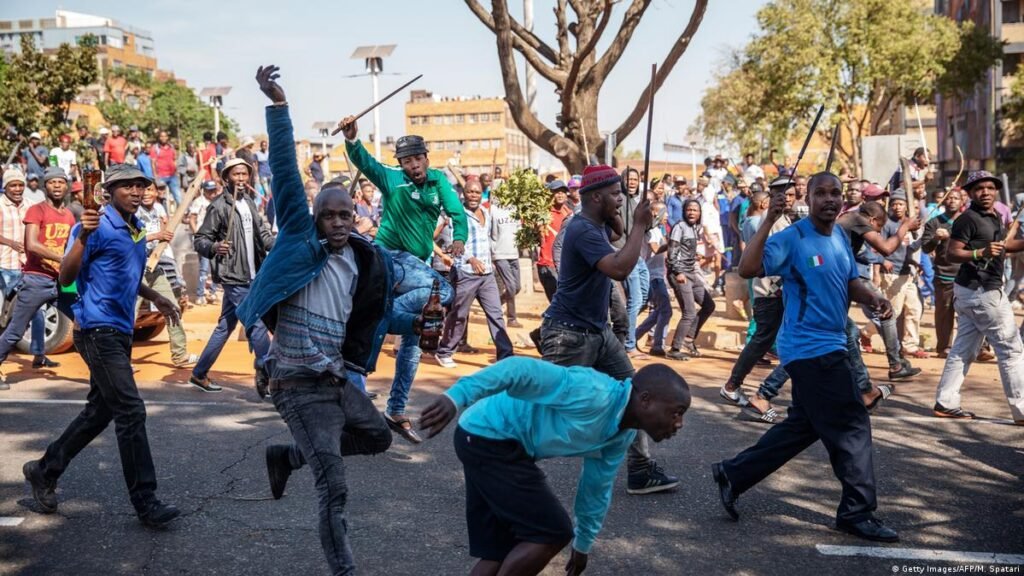
The repeated outbreaks of xenophobic violence in South Africa are increasingly exposing deeper problems within the country’s economy, political leadership, and social stability.
Although attacks against foreign African migrants are often presented as isolated reactions to immigration pressures, the reality appears far more complicated. Rising unemployment, poverty, crime, weak public services, and growing public frustration have created an environment where migrants are becoming convenient targets for wider national anger.
South Africa remains one of Africa’s most advanced economies, yet it also struggles with some of the world’s highest unemployment and inequality levels. For many frustrated citizens, especially young people facing economic hardship, blaming foreigners can appear easier than confronting the structural failures within governance and economic management.
That is why many analysts argue that xenophobia in South Africa is not truly about foreigners alone. It is also about hopelessness, economic pressure, and political frustration.
Another important issue is the growing influence of activist groups such as Operation Dudula, which claims to defend South African jobs and services from undocumented migrants. Supporters view such groups as responding to government failures on immigration enforcement, while critics believe their rhetoric risks encouraging vigilantism and mob justice.
This places the South African government in a difficult position. Officials publicly condemn violence and insist that civilians should not enforce immigration laws themselves. However, critics argue that government responses often come only after violence has already erupted rather than preventing tensions before they explode.
The situation is also damaging South Africa’s image across Africa.
Historically, many African nations supported South Africa during the anti apartheid struggle through diplomacy, shelter, financial support, and political solidarity. Because of that history, xenophobic attacks against fellow Africans create emotional reactions across the continent and raise difficult questions about African unity.
Another concern is the growing normalization of anti migrant language within political and public discussions. Once economic frustration becomes linked too strongly with nationality or identity, it becomes easier for social anger to transform into violence.
Researchers quoted in the report also challenge the popular belief that migrants are the main cause of unemployment and crime. According to migration experts, the actual number of migrants in South Africa is too small to explain the country’s deep economic problems. This suggests that migrants are increasingly being used as political scapegoats for much larger systemic failures.
At the same time, some South Africans insist the country should not be defined entirely by xenophobia. Many communities continue to live and work peacefully alongside migrants every day, despite tensions and political rhetoric.
Still, fear among migrant communities is clearly growing. Reports of attacks, looting, intimidation, and threats are creating uncertainty for thousands of Africans who moved to South Africa seeking safety, employment, or business opportunities.
Ultimately, South Africa’s xenophobia crisis reflects a broader warning for many countries around the world. When economic hardship, inequality, weak governance, and public frustration remain unresolved for too long, societies often begin searching for vulnerable groups to blame.
The challenge facing South Africa now is not only how to manage migration, but how to rebuild public trust, strengthen economic opportunity, and prevent political frustration from turning ordinary citizens against one another.
By Viewers Corner News