
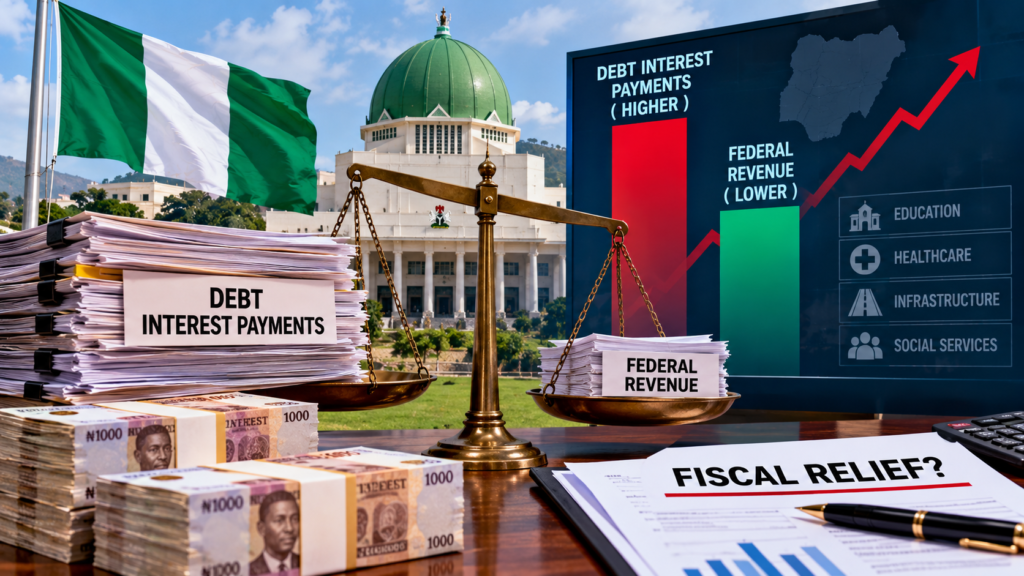
Nigeria’s federal finances face a serious constraint: recorded interest payments reached ₦7.7 trillion in the first half of 2026, compared with federal revenue of ₦6.2 trillion. The figures put interest payments at approximately 124 per cent of recorded revenue.
The Federal Ministry of Finance has challenged how the comparison is interpreted. It says the interest figure includes obligations serviced on behalf of other levels of government, while the revenue figure excludes some agency income not yet remitted to the Treasury. It also argues that revenue collection is affected by the timing of tax payments. The Ministry reports that revenue grew by approximately 72 per cent year-on-year, faster than the 37.5 per cent increase in interest payments, narrowing the gap from ₦2 trillion to ₦1.5 trillion.
These qualifications matter. Interest payments and total debt service are different measures, and comparisons must cover the same levels of government. But the underlying fiscal pressure cannot be dismissed. High interest costs reduce the resources available for infrastructure, education, healthcare and other public services.
The government should publish a reconciled account showing federal revenue, interest obligations, principal repayments and consolidated figures separately. Nigerians also deserve clear information on how much capital spending was actually delivered.
The next fiscal reports must show whether the improvement in revenue is translating into more resources for public services.
By Viewers Corner News