
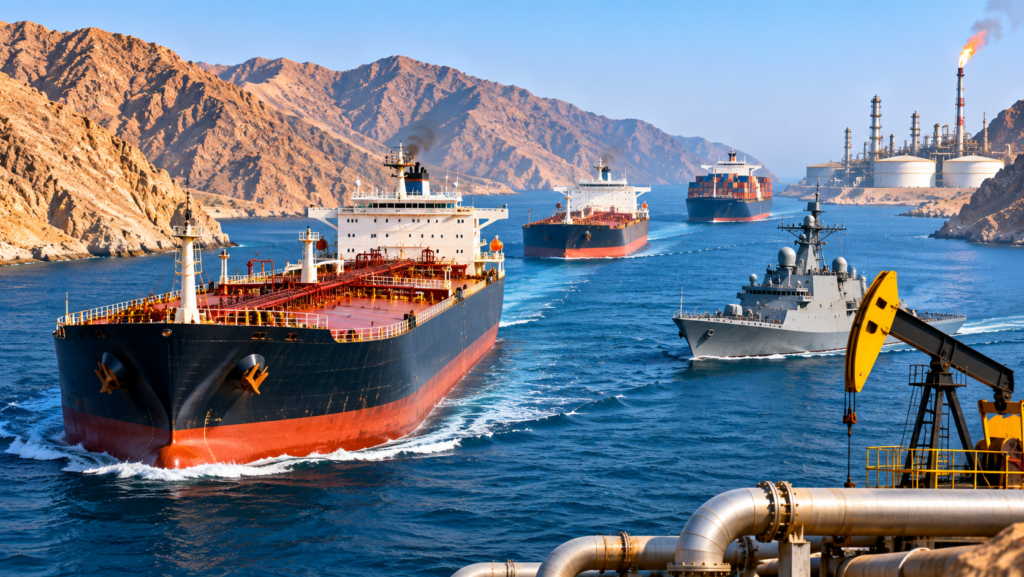
Attacks on commercial shipping around the Strait of Hormuz are raising fears of a wider economic and security crisis across the Gulf.
Reports on 23 November indicate that at least three more vessels were struck by projectiles while attempting to cross the strategic waterway. The latest incidents follow weeks of escalating confrontation involving the United States, Iran and regional actors.
The Strait of Hormuz is one of the world’s most important energy shipping routes. Prolonged disruption could affect oil and gas supplies, shipping insurance, transport costs and international trade.
For Nigeria, the consequences could be significant.
Higher international oil prices may improve government revenue, but they can also increase domestic fuel costs, transport expenses and inflationary pressure. The benefits and burdens will not necessarily fall on the same people.
Meanwhile, Gulf countries face risks to energy infrastructure, maritime trade and civilian security.
Diplomatic efforts are continuing, but statements about negotiations have not yet removed the danger facing commercial vessels.
The questions are urgent:
– Who is responsible for the latest attacks on commercial shipping?
– What protection is available for civilian vessels and their crews?
– What diplomatic agreement can prevent further escalation?
– Who will compensate companies and workers affected by attacks?
– What contingency plans exist to protect energy supplies and international trade?
Governments must not treat shipping security as a narrow military issue. It affects food prices, energy costs, employment and economic stability far beyond the Gulf.
The international community must prioritise de-escalation and protect commercial shipping before another incident triggers a wider confrontation.
We don’t just report the news. We analyse what it means.
By Viewers Corner News.