
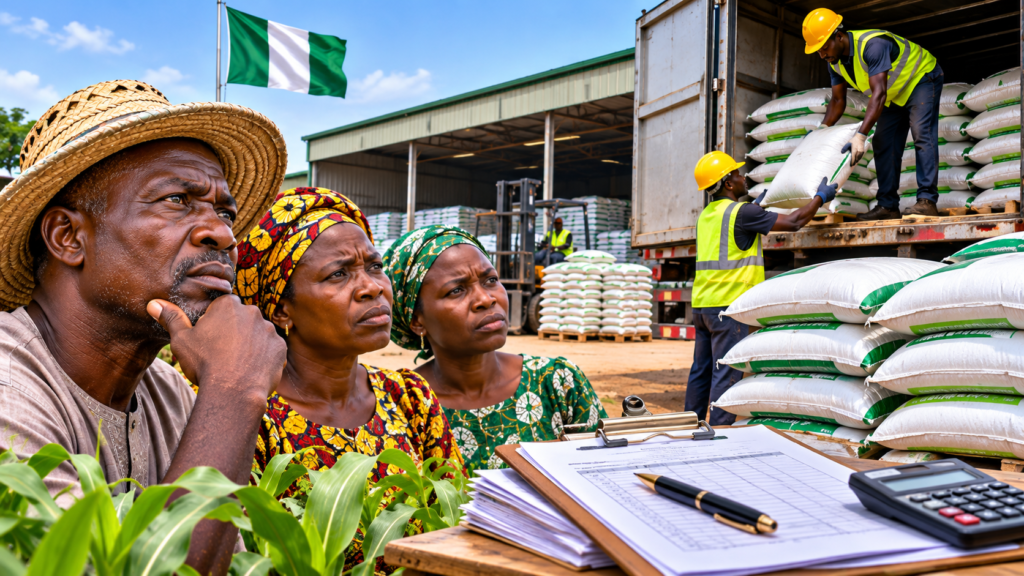
The Federal Government is promising three million bags of fertiliser and the release of stored grains. But Nigerians have heard numerous agricultural promises. The real test is whether these interventions will reach farmers and reduce the cost of food.
On November 18, the Agriculture Ministry announced plans to release stored grains and implement fertiliser interventions.
The previous announcement from the Presidency indicated that available raw materials could support the production of approximately three million bags of fertiliser.
But production capacity is not the same as actual delivery.
Where are the fertiliser stocks? How much has been produced? What is the procurement cost? Which farmers will receive them, and how will the government prevent diversion?
The grain intervention raises similar questions.
How much grain is currently stored? What did government spend acquiring and preserving it? How much is fit for consumption? When will distribution begin, and who will monitor the process?
Government must also explain how it intends to measure the impact.
A decline in annual inflation does not automatically mean food has become affordable. Nigerians need evidence of falling market prices, improved household purchasing power and better access to food.
The Ministry should publish distribution figures, state-by-state allocations, warehouse inventories and independent delivery assessments.
THE BOTTOM LINE
Food security cannot be achieved through announcements and production targets.
The government must show Nigerians what was purchased, what was produced, what was distributed and what changed in the markets.
Farmers need affordable inputs. Households need affordable food. Taxpayers deserve evidence that public agricultural spending is delivering results.
Viewers Corner News — Holding Power Accountable.