
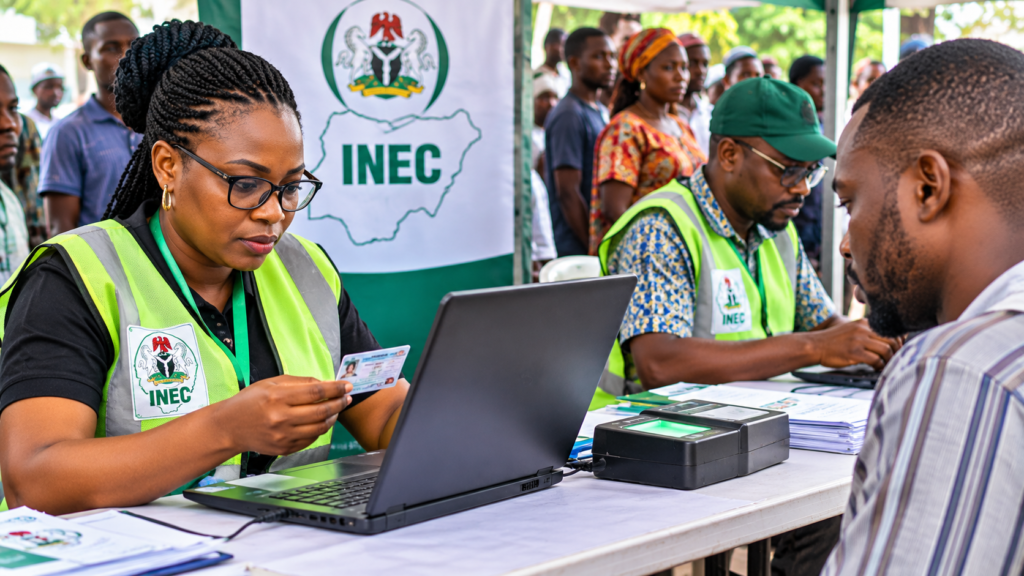
The Independent National Electoral Commission (INEC) says its system has flagged 268 voter records for suspected irregularities, including photographs believed to have been generated using artificial intelligence. That announcement raises a question more important than the number itself: how reliable is the process INEC is using to determine who belongs on Nigeria’s voter register ahead of the 2027 general election?
INEC has explained that its Automated Biometric Identification System (ABIS) identified the records during its examination of the voter database. The commission says it has commenced a process to clean up the register, with the final register expected on December 15, 2026.
There is a legitimate reason to investigate suspicious registrations. Electoral fraud, duplicate registrations and false identities can undermine public confidence in an election. INEC has a responsibility to ensure that the register is accurate and that only eligible voters are included.
But that responsibility comes with another obligation: protecting genuine voters from being wrongly excluded.
The use of artificial intelligence in producing or altering photographs is not, by itself, proof that a person is fictitious or that a registration is fraudulent. A genuine voter may have used an enhanced photograph without attempting to impersonate anyone. The commission must distinguish between a suspicious image and a fraudulent identity.
That distinction is crucial.
If INEC’s screening system flags a photograph, what happens next? Is the registration automatically rejected, or does the individual undergo further verification? What evidence is required before a record is removed? Can an affected voter challenge the decision and have the case reviewed by a human officer?
These are not technical details that should be hidden from the public. They concern citizens’ constitutional right to participate in elections.
There is also the question of the system itself. How accurate is the screening process? What safeguards exist against false positives? Has INEC independently tested the system’s ability to distinguish AI-generated images from genuine photographs that have been edited or enhanced?
The commission should publish a clear explanation of its verification procedure, including the number of records flagged, the categories of suspected irregularities, the number confirmed as fraudulent and the number cleared after further checks.
The public also needs to know whether the 268 cases represent the full extent of the problem or merely the records identified at this stage of the exercise.
SERAP has called for an investigation by the Nigeria Data Protection Commission. That request raises another important issue: the handling of citizens’ personal and biometric information. INEC must demonstrate that its voter-verification process respects data-protection requirements and that sensitive information is properly secured.
The stakes are significant. Nigeria is approaching another general election, and confidence in the voter register is central to confidence in the entire electoral process.
INEC cannot simply announce that suspicious records have been identified and expect Nigerians to accept the outcome without knowing how the decisions will be made.
The commission must answer five basic questions: What exactly makes a record suspicious? What verification is conducted before removal? How can affected voters appeal? How is personal data protected? And what independent safeguards will prevent genuine voters from being disenfranchised?
The December 15 deadline makes transparency even more urgent. There must be enough time for proper verification, correction and complaints before the register is finalised.
INEC is right to protect the electoral register from manipulation. But cleaning the register must not become a process in which legitimate voters lose their rights because an algorithm raises a suspicion.
The commission must prove that its technology is protecting the integrity of the vote, not creating a new risk to citizens’ right to vote.
We don’t just report the news. We analyse what it means.
By Viewers Corner News