
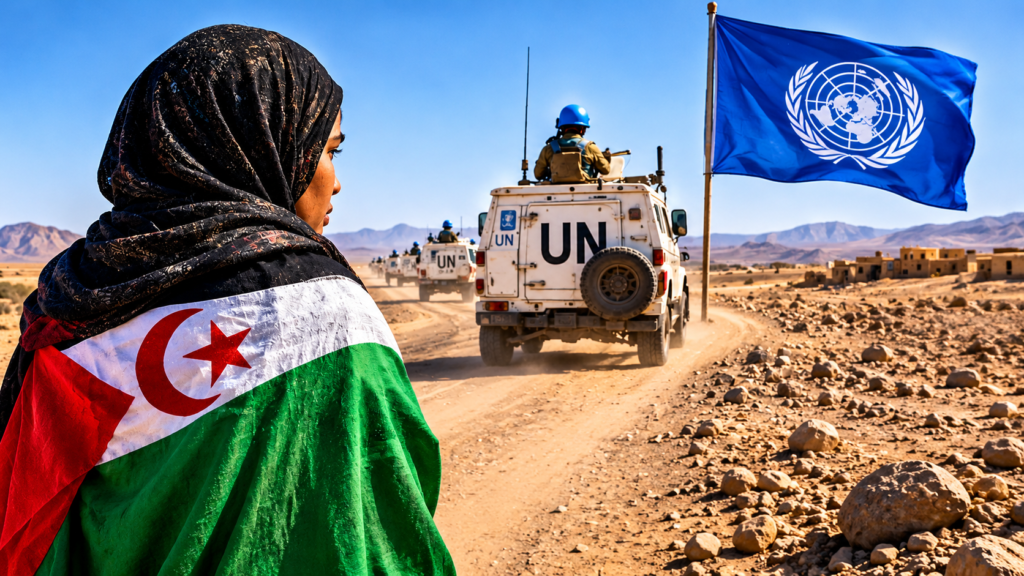
For more than three decades, the United Nations maintained a peacekeeping presence in Western Sahara under a mission established to support a ceasefire and a political process that was supposed to allow the territory’s people to determine their future.
Now that mission is winding down. The question is not simply what happens to a United Nations operation. It is what happens to the people whose political future remains unresolved.
The United Nations Mission for the Referendum in Western Sahara, known as MINURSO, was established in 1991 following the ceasefire between Morocco and the Polisario Front. A central part of the settlement was the promise of a referendum on self-determination.
That referendum never took place.
Morocco controls most of the territory, while the Polisario Front continues to seek independence. Algeria supports the Polisario Front, and the dispute has remained a source of tension across North Africa.
The failure to deliver the promised referendum is the central issue that should not be lost in the discussion about the mission’s future.
For the people of Western Sahara, this is not merely a diplomatic disagreement between governments. It concerns self-determination, political representation, security, displacement and the right to have their future decided through a credible process.
The international community has maintained a peacekeeping structure for decades, yet the political objective that justified its creation remains unfulfilled.
That raises difficult questions for the United Nations and the countries that have influenced the diplomatic process.
What concrete mechanism will now protect the ceasefire and prevent further escalation? Who will monitor developments on the ground? How will the international community ensure that the rights and interests of the Sahrawi people remain part of the political process?
The reported winding down of MINURSO must also be examined in the context of the Security Council’s inability to reach agreement on the way forward. When major powers cannot agree on a workable path, smaller populations caught in the dispute risk being pushed further to the margins.
A peacekeeping mission cannot resolve every political disagreement. But removing or reducing an international presence without a credible alternative raises questions about the protection of civilians and the prospects for renewed negotiations.
There is also an accountability issue. The United Nations and its member states should explain what happened to the original referendum commitment, why it was never implemented and what guarantees exist that the next diplomatic arrangement will not simply postpone the question again.
Morocco, the Polisario Front and the governments involved in the dispute also have responsibilities. They must explain what political compromise, security arrangements and guarantees they are prepared to accept.
The international community should not treat the absence of open conflict as proof that a dispute has been resolved. A population can remain trapped in political uncertainty even when the world’s attention has moved elsewhere.
For Africa, the implications extend beyond Western Sahara. The dispute affects relations between neighbouring countries, regional cooperation and the ability of African institutions to contribute to peaceful political settlements.
The African Union and relevant international partners should remain engaged, while respecting the rights and legitimate interests of the people directly affected.
The immediate concern is what replaces the role MINURSO has played. The longer-term concern is whether the international community is abandoning a political commitment that it has failed to fulfil for 35 years.
The people of Western Sahara should not become an afterthought in negotiations conducted by governments and powerful states.
If the United Nations mission is winding down, the Security Council must explain what comes next. What safeguards will remain? Who will monitor compliance? What credible political process will address the unresolved question of self-determination?
A peacekeeping mission can end. But the responsibility to protect civilians and pursue a just political settlement does not disappear with it.
We don’t just report the news. We analyse what it means.
By Viewers Corner News