
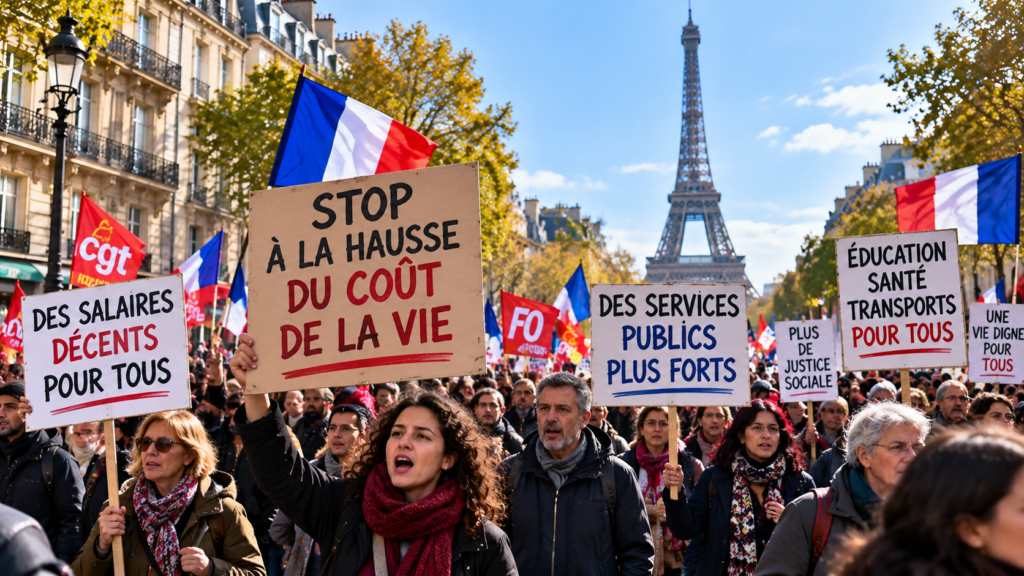
France is facing renewed political and social pressure after nationwide demonstrations on 17 October over rising living costs and deteriorating public services escalated into clashes, looting and damage to public buildings. Authorities subsequently reported approximately 2,400 arrests. President Emmanuel Macron condemned the violence and ordered a review of possible failures in intelligence and police preparedness, while promising discussions involving students, teachers, unions, lawmakers and business leaders.
The unrest must be understood carefully. Many people took part in demonstrations over economic and public-service concerns, while violent groups committed acts of destruction. Those responsible for violence should be held accountable, but their actions should not be treated as proof that every protester shares the same intentions.
The government’s challenge is twofold: protect the public and property while addressing legitimate concerns about the cost of living and the quality of public services. A response focused only on arrests and restrictions would leave the underlying grievances unresolved. Conversely, peaceful protest cannot justify attacks on people, businesses or public institutions.
The situation matters to audiences beyond France because economic pressure and declining confidence in public services can become serious political tests for governments in any country.
The next developments to watch are whether the promised consultations produce concrete policy responses, whether further unrest occurs and whether investigations establish any failures in the authorities’ preparation.
By Viewers Corner News