
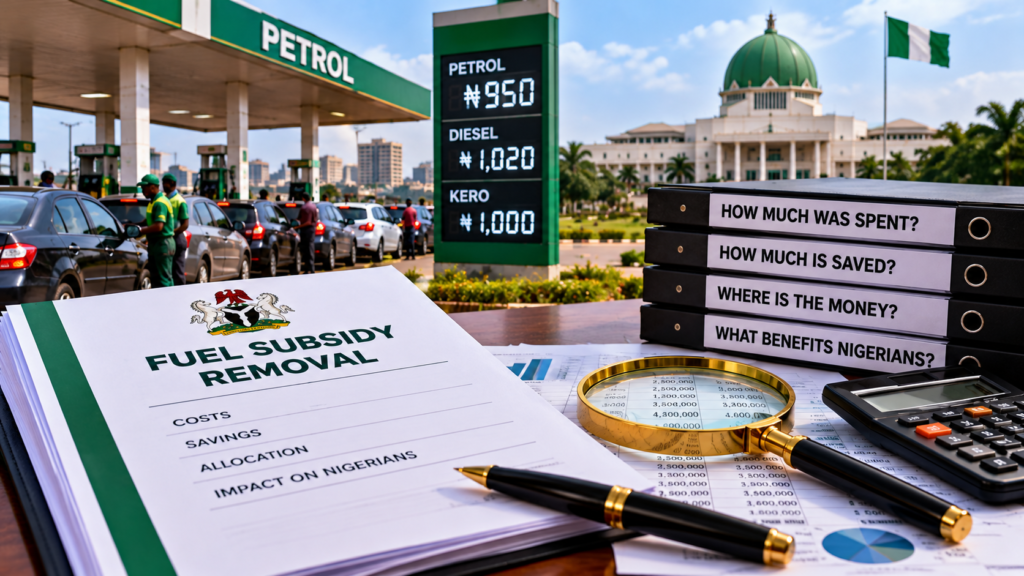
Nigeria’s Finance Minister, Taiwo Oyedele, has declared that petrol subsidies will not return and that private domestic and foreign investment, rather than additional government borrowing, will drive the country’s next phase of economic growth.
Speaking in London on 21 October, Oyedele argued that the government’s economic reforms had improved public finances, strengthened foreign reserves and attracted investment. He said inflation had fallen to 14.63 per cent from 21 per cent a year earlier and that the government wanted average annual economic growth of approximately seven per cent over the next five years.
He also said about 10 million households were receiving cash transfers.
These are significant claims, but Nigerians need more than targets and assurances. The International Monetary Fund‘s June 2026 assessment estimated that poverty had reached 63 per cent under the national poverty line. It reported that 9.2 million households had enrolled in the cash-transfer system and that beneficiaries had received at most three transfers of ₦25,000 since 2023. Those figures predate the minister’s latest statement, so they do not establish the current number of recipients or payments. They do, however, underline the need for updated evidence.
The government should publish current cash-transfer figures showing how many households have actually received payments, how frequently they are paid and how beneficiaries are selected. It should also explain how private investment will translate into productive businesses, better-paying jobs, reliable electricity and lower business costs.
Private capital can support growth, but investors will not automatically deliver affordable public services or protect vulnerable households. Nor does lower inflation mean that prices have returned to levels families could afford before the cost-of-living crisis.
The minister’s seven per cent growth ambition is considerably higher than the IMF’s October projections of 4.2 per cent for 2026 and 4.3 per cent for 2027. The government should explain the investment, productivity and employment gains expected to close that gap.
Removing petrol subsidies was a major policy decision. The public must now be able to judge its consequences against measurable improvements in incomes, services and living standards.
We don’t just report the news. We analyse what it means.
By Viewers Corner News.