
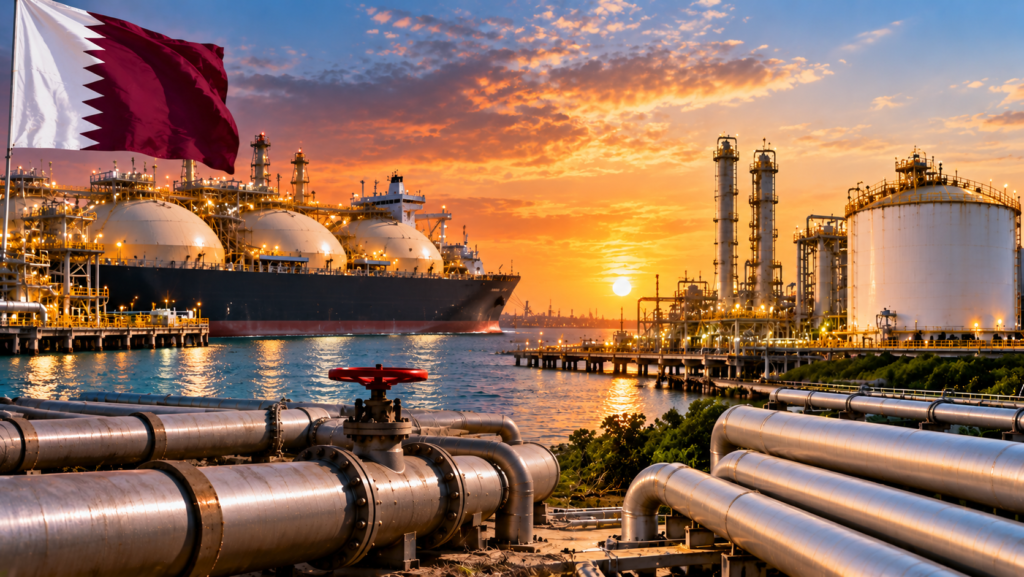
The disruption of Qatar’s liquefied natural gas industry is a reminder that energy security depends not only on underground reserves but also on functioning infrastructure, safe shipping routes and the ability to deliver supplies reliably.
Fresh industry analysis published on October 12 indicates that Qatar’s LNG exports remain severely restricted amid the conflict involving Iran and disruption around the Strait of Hormuz.
Damage to Qatari gas facilities has affected approximately 17 per cent of the country’s LNG export capacity. The consequences extend beyond Qatar: buyers in Europe and Asia face tighter supply, while uncertainty over shipping and repairs complicates the return of normal deliveries.
Qatar’s expansion plans offer a possible route to additional supply, but new capacity cannot immediately replace damaged facilities. The first production from its North Field East expansion is expected in 2027, following the planned start of operations for the first LNG train.
For Nigeria, this is both a warning and a potential commercial opportunity.
Nigeria is an established LNG supplier, and international buyers seeking to diversify supply could create opportunities for additional Nigerian exports. But higher global demand does not automatically translate into higher Nigerian revenue.
The country must have sufficient feed gas, functioning pipelines, reliable processing facilities and the capacity to deliver contracted cargoes. Nigerian officials have themselves identified gas production and infrastructure expansion as priorities.
The Federal Government and Nigerian National Petroleum Company Limited should explain how current projects will translate into measurable increases in available gas and actual exports. They should publish delivery milestones and explain how export ambitions will be balanced with domestic gas needs.
The global disruption also demonstrates the risks of relying on a small number of routes and facilities. Nigeria should not assume that high prices alone will secure a lasting advantage.
The next indicators to watch are the restoration of Qatari supply, shipping conditions through Hormuz, global LNG prices and Nigeria’s actual production and export volumes.
Nigeria’s opportunity will depend on its ability to deliver—not merely on other countries’ difficulties.
By Viewers Corner News