
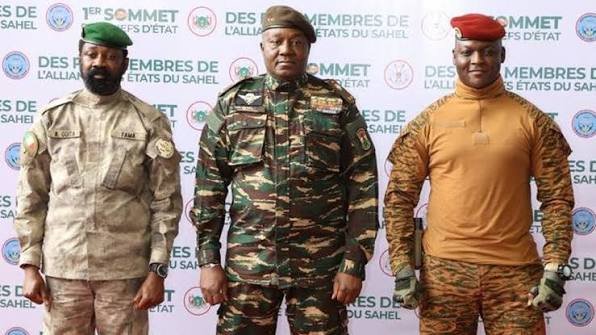
Burkina Faso, Mali and Niger are taking another step towards building shared institutions under the Alliance of Sahel States with the expansion of Tafouk TV, their joint television platform.
The channel began its regular programming from Bamako in September, broadcasting news, current affairs and other programmes aimed at audiences across the three countries and beyond.
The development is significant because the Alliance of Sahel States is no longer focused only on military and diplomatic cooperation.
The three countries are increasingly developing shared institutions intended to strengthen their political, cultural and economic alignment.
Tafouk TV is part of that broader effort.
Its programming includes French and several local African languages, reflecting an attempt to reach audiences across the three countries while promoting a shared regional identity.
The move also reflects the wider information battle surrounding the Sahel.
Burkina Faso, Mali and Niger have increasingly challenged the influence of France and other Western partners while strengthening relationships with alternative international partners, including Russia.
The three governments have repeatedly argued that they want greater control over their own narratives and information systems.
That argument is now being translated into institutions.
But the development also raises an important question about the balance between information sovereignty and independent journalism.
A state-controlled or state-backed media system can strengthen a government’s ability to communicate directly with citizens, but credible public information also requires room for scrutiny, competing viewpoints and independent verification.
For the Alliance of Sahel States, Tafouk TV is therefore more than a television channel.
It is part of a larger effort to build a common regional identity and reduce dependence on external information structures.
What happens next will be important as Burkina Faso, Mali and Niger continue to develop common institutions and redefine their relationships with France, other West African states and international partners.
By Viewers Corner News