
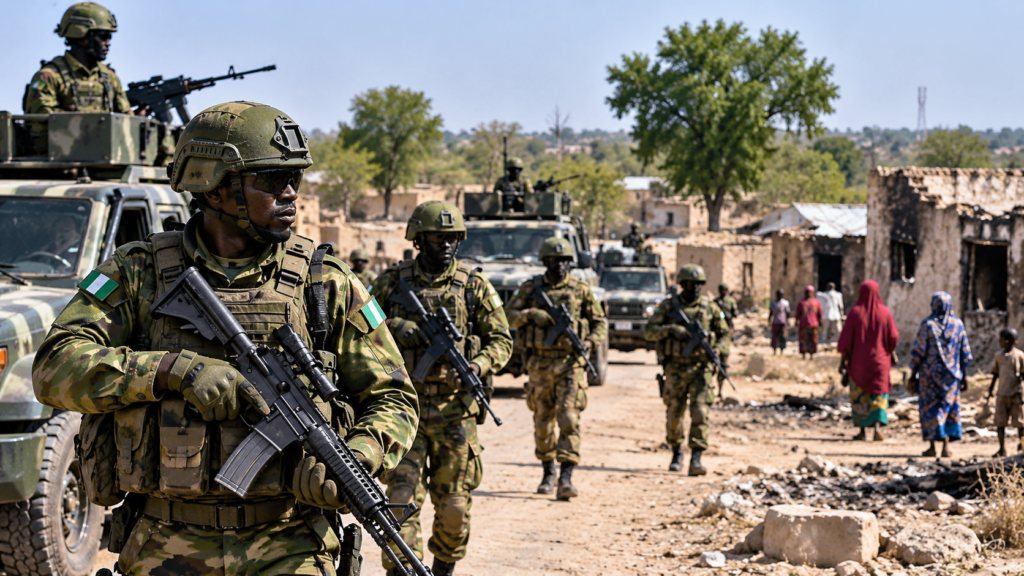
Nigeria’s military has reported killing 103 Islamic State West Africa Province fighters during seven airstrikes conducted between 10 and 18 October across parts of Borno and Adamawa states.
Operation Hadin Kai said the strikes targeted militant positions and logistics facilities around Guzamala and Monguno in Borno State and Gombi in Adamawa State. The military also reported destroying logistics hubs and storage facilities used by the group.
If sustained, operations that weaken militant supply networks can help reduce the threat to military personnel and civilian communities. But the reported number of fighters killed is an official military claim, not an independently verified assessment of the operation’s overall impact.
For residents of the affected areas, the essential question is whether these operations translate into safer communities, fewer attacks, reduced displacement and improved freedom of movement.
The military’s public statement did not provide an independently verified assessment of civilian harm or a detailed measure of the longer-term effect on militant activity. That does not establish that civilians were harmed, but it leaves important questions unanswered.
Military authorities should publish non-sensitive information showing whether the targeted facilities have been disabled, whether subsequent attacks have declined and what safeguards were used to protect civilians. Any credible reports of civilian casualties should be investigated transparently.
Airstrikes can disrupt armed groups, but lasting security requires more than operational statistics. Communities need protection, displaced families need a safe path home, and farmers and traders need to use roads and markets without fear.
The next test is whether the reported military gains produce measurable improvements in civilian safety.
We don’t just report the news. We analyse what it means.
By Viewers Corner News