
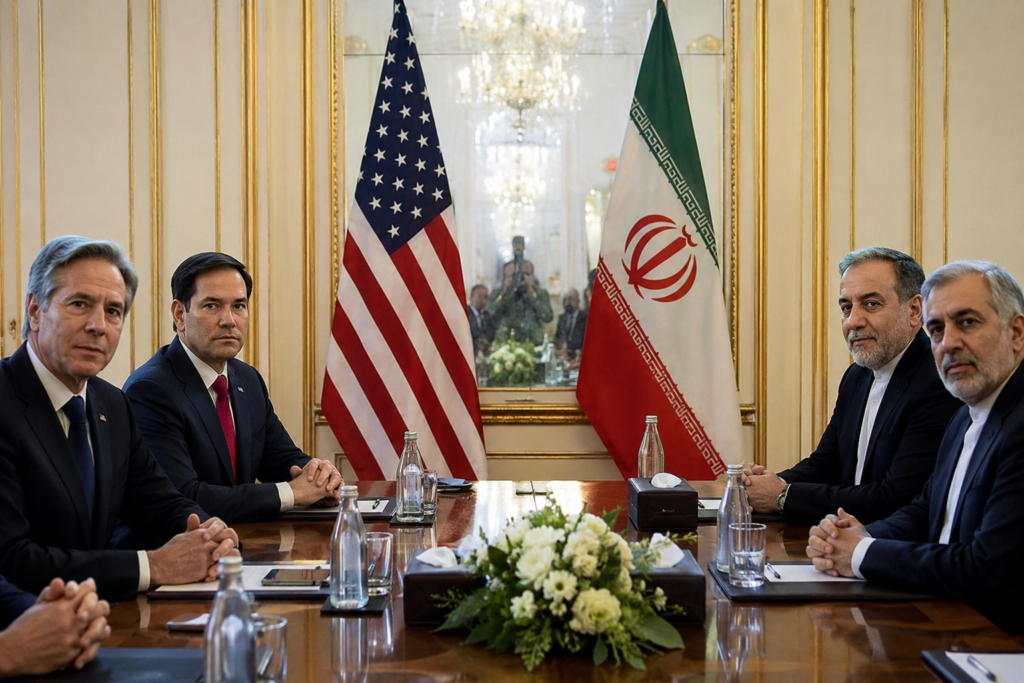
The United States and Iran have reportedly reached a preliminary agreement aimed at ending months of conflict that has disrupted global energy markets and heightened tensions across the Middle East.
According to reports, the agreement is expected to be formally signed in Switzerland later this week. The proposed deal includes the reopening of the Strait of Hormuz, one of the world’s most important oil shipping routes, and an end to military operations linked to the conflict.
The Strait of Hormuz plays a critical role in global energy supply because a large percentage of the world’s oil and natural gas shipments pass through the waterway. Disruptions in the area have contributed to higher fuel prices and economic uncertainty in many countries.
News of the agreement was welcomed by financial markets, with global oil prices falling and stock markets recording gains as investors expressed optimism that tensions in the region may be easing.
Despite the positive development, several important issues remain unresolved. The future of Iran’s nuclear programme is expected to be addressed during further negotiations, while discussions on sanctions and broader regional security concerns are also likely to continue.
For many countries, especially those heavily dependent on imported fuel, a lasting agreement could help ease energy costs and support economic stability.
While the announcement has raised hopes for a reduction in regional tensions, analysts believe the long-term success of the agreement will depend on whether both sides fully implement its terms and make progress on outstanding issues in the months ahead.
By Viewers Corner News